Numbers and footage, no scripture.
The case, for anyone.
The numbers, the footage, and the reasoning, each linked to where it came from so you can check it. The rest of this site makes the same case from the Torah.
Why do we love dogs and eat chickens?
Habit. We know our dogs, and we never meet the hens.
- Normal“Everyone does it.”It feels normal because the farms are out of sight. The footage below shows what happens inside them.
- Natural“Animals eat animals, and we’re built for it.”Something being natural does not make it right. And people built the cage and the crate.
- Necessary“I need it.”A real need, like an illness, can justify the suffering. Most people have no such need: they eat meat for the taste.
This page has photographs or video of what is done to animals, which may include slaughter. They stay hidden until you say you're 18 or over.
The site can't check your answer, and it's saved only in this browser.
The case, in order
What animals feel
A hen feels her chicks' distress.
When scientists blew a puff of air at her chicks, the mother hen's heart rate climbed and she called to them more. The researchers call this one of the building blocks of empathy.
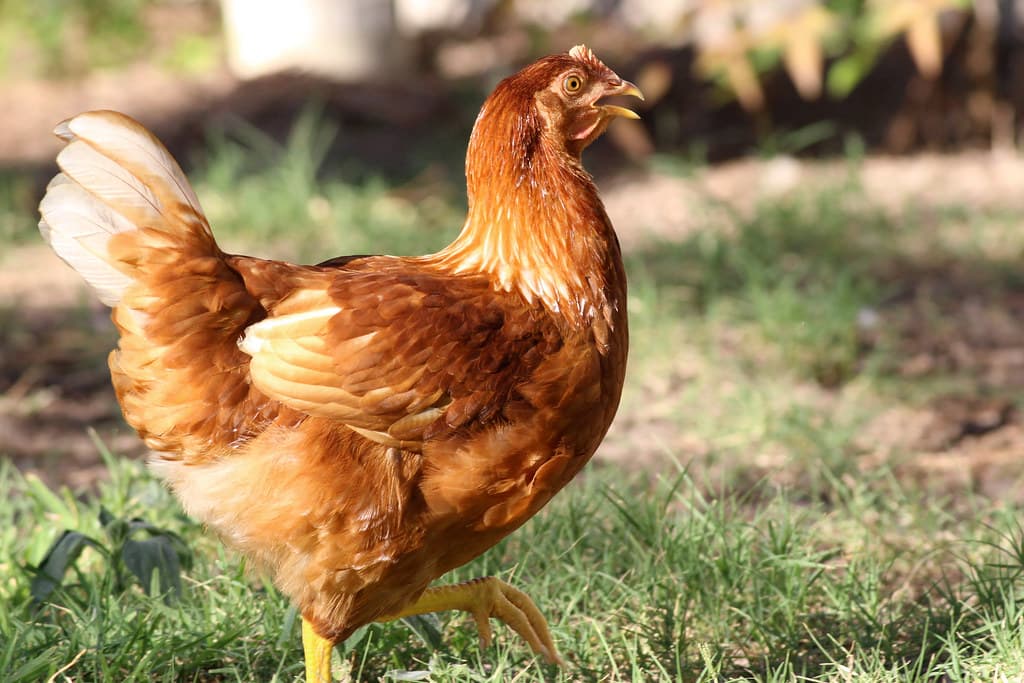
A laying hen outdoors, mid-stride, entirely at ease. She is the same bird, with the same needs, as the hens in the battery cages.GalgenTX · CC BY 2.0 · source When their chicks were hit with a mildly unpleasant puff of air, the mother hens' hearts beat faster, the temperature of their eyes dropped, they grew more alert, and they called to their chicks more. These are the physical and behavioural marks of empathy: the hens reacted to their chicks' distress as stress of their own.
Edgar et al., Proc. R. Soc. B, 2011 About this source
A controlled study. The hens' bodies and behaviour responded to their chicks' distress. The authors call this one of the building blocks of empathy. They do not claim that hens feel empathy the way people do.The harm
The EU's own scientists say cages stop hens from doing what they are strongly driven to do.
The same panel says cutting a hen's beak harms her and should be phased out. That is a government report, not a campaign.
See it
A laying hen at Shefer, Israel, January 2012. Her beak was cut back as a chick so that crowded birds do not injure each other, and the bare patches are where the cage wore her feathers off. The EU's own scientists say the cutting hurts and should be phased out. It is still standard practice.
The EU's own scientific panel on cutting hens' beaks: it harms the hens, it is done to stop them pecking and injuring each other, and it "should not be necessary if good management practices are implemented". The Panel recommends phasing it out. On cages, it finds that the small space and bare surroundings stop hens from doing what they are strongly motivated to do.
EFSA, laying hens, 2023 About this source
This is a regulator's scientific opinion, not a campaign document, and that is why it is here. It describes harm and recommends phasing the practice out. It does not call the industry cruel. That word is this site's own, and the site argues for it; it does not borrow it from the Panel.Was it ever necessary?
The Academy of Nutrition and Dietetics says a planned vegan diet can be adequate for adults.
Vitamin B12 was only isolated in 1948. Before then, nobody could safely live without animal foods for long. So the choice to live without them is less than a century old.
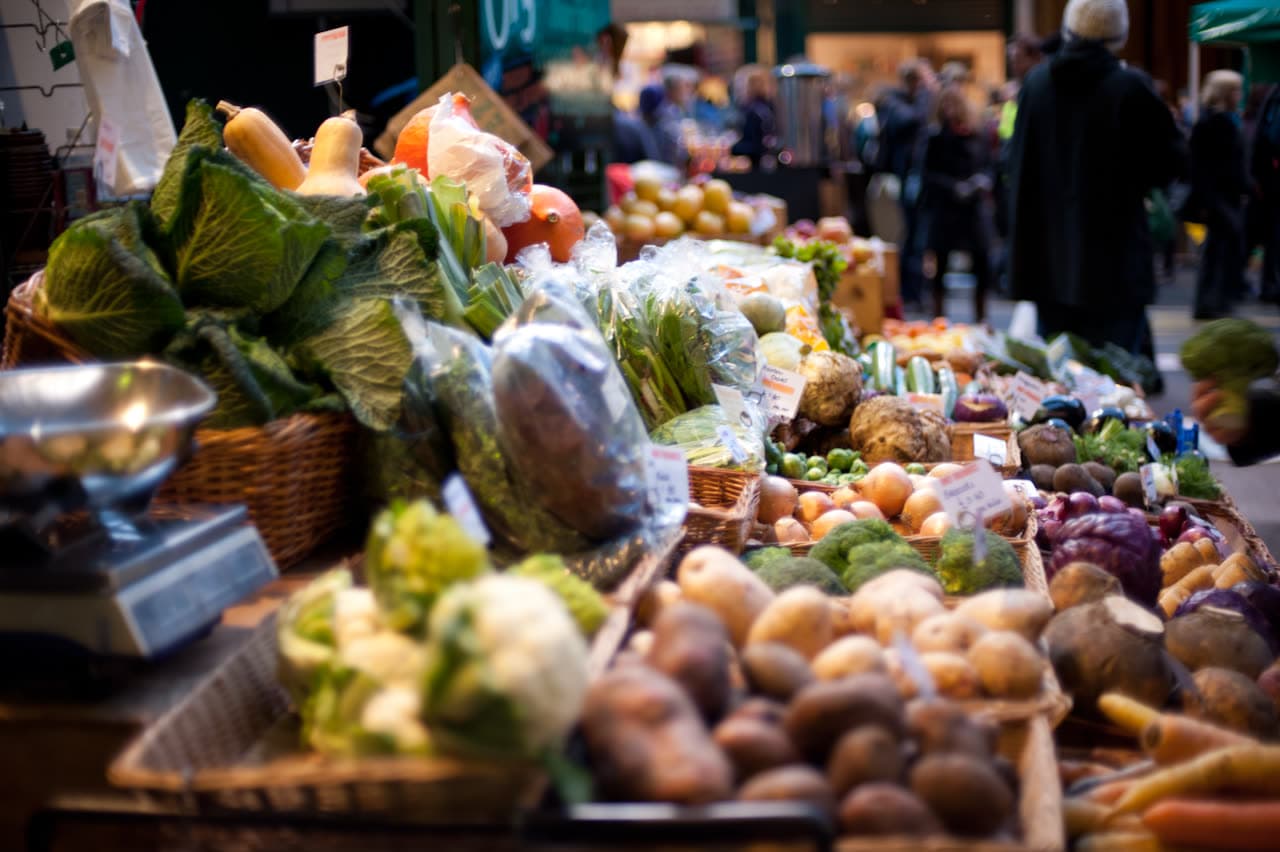
A vegetable stall at Borough Market, London. Until vitamin B12 was isolated in 1948, living without any animal food carried real risk.Jack Gavigan · CC BY-SA 3.0 · source The Academy's current position, in effect to 31 December 2032: for adults, appropriately planned vegetarian and vegan diets can be nutritionally adequate. By vegan it means a diet with no food from animals at all.
Academy of Nutrition & Dietetics, 2025 About this source
The 2025 paper covers only adults. It drops the 2016 paper's explicit endorsement for pregnancy, infancy and childhood. Those were not retracted; the review was simply limited to adults. The site uses the narrower claim. Its argument needs only this: the adult reading it can eat a healthy diet with no food from animals.Also cited · B12 isolated, 1948
Vitamin B12 was first isolated in 1948, within living memory. That makes ours the first generation that can reliably eat a complete, healthy diet with no animal foods.
B12 isolated, 1948 About this source
Two teams, simultaneously: Rickes, Brink, Koniuszy, Wood and Folkers at Merck ("Crystalline Vitamin B12," Science 107:396–7, the linked paper) and E. Lester Smith at Glaxo ("Purification of Anti-pernicious Anæmia Factors from Liver," Nature 161:638–9, doi 10.1038/161638a0). The site's claim that ours is the first generation able to live this way depends on this date, so the site cites the original papers, not a later account.Where the wanting comes from
Our taste for meat and milk was shaped by advertising.
Twenty-two producer-funded programs overseen by the USDA, including the ones behind 'Got Milk?' and 'Beef. It's What's for Dinner', took in over $885 million in one year, a government audit found.
See it
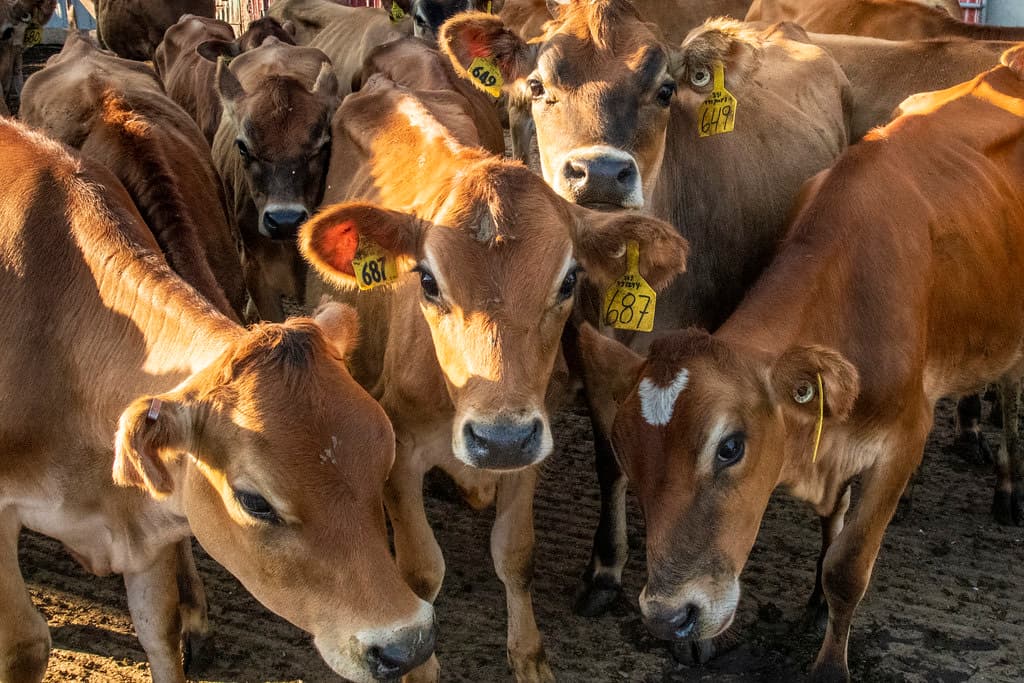
Jersey dairy cows crowded in a yard on their way to be milked. Each wears a numbered tag in her ear: 649, 687.Lance Cheung / USDA · Public domain — work of the U.S. federal government · source The USDA oversees 22 producer-funded "checkoff" marketing programs, the ones behind "Got Milk?" and "Beef. It's What's for Dinner". In 2016 their assessments totalled over $885 million, ranging from $0.6 million for popcorn to $332.1 million for dairy.
US GAO, GAO-18-54, 2017 About this source
A neutral government-auditor source, not an advocacy one. Checkoff assessments are federally mandated marketing orders; the figures are the GAO's, for 2016. Private advertising by processors and restaurant chains is separate, and far larger.The starting point
Almost everyone already believes an animal's suffering counts for something.
If someone stepped on your dog's paw and she yelped, you would flinch. This argument needs nothing more than that.
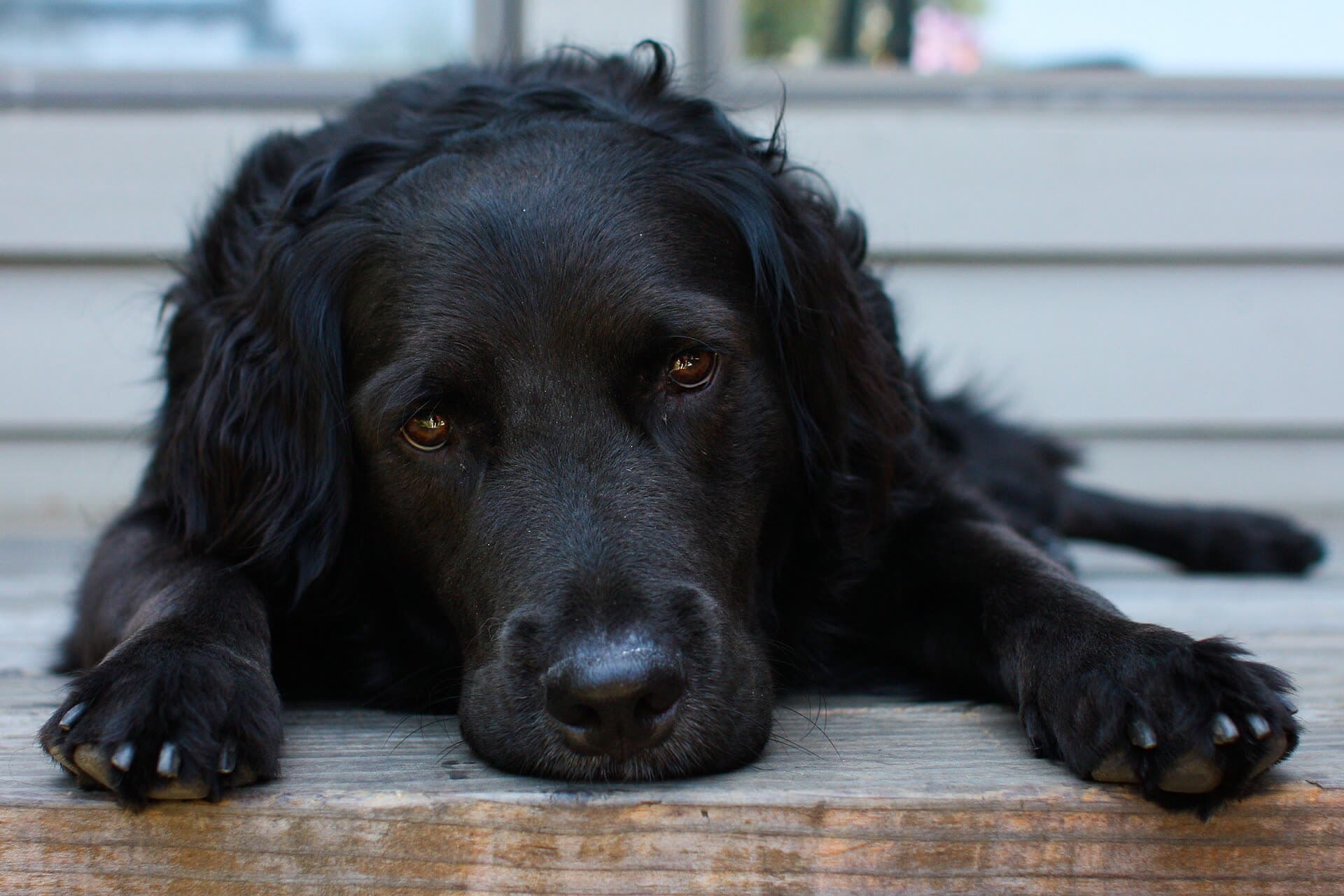
A dog named Tomahawk, resting on a porch in California.Joe Parks · CC BY 2.0 · source What changed
The farms in children's picture books hardly exist any more.
Today's turkeys are bred so heavy that the males cannot mate reliably, so almost every turkey is conceived by artificial insemination. No farmer in any earlier century raised a bird like that.
Commercial turkeys are bred by artificial insemination, week after week. Selection for a heavier, broader breast left the toms unable to transfer semen reliably at copulation. There is effectively no natural mating left in the industry.
Bakst & Dymond, poultry AI About this source
The common line that these birds are physically incapable of mating is stronger than the literature supports: they can mate, but not reliably enough for commercial production, so the whole industry runs on insemination by hand.The test
Name the difference between the dog you would defend and the hen on the farm.
You would stop a man beating a dog, and standing up for the dog costs you nothing. Standing up for the hen costs you food you like. That difference is about what you would give up. It changes nothing about what the hen feels.
Three possible answers
To keep eating meat, milk and eggs, you have to give one of three answers.
One: the hen's suffering does not count. But you did not believe that about the dog.
Two: you have a real need, such as an illness. A real need does excuse you.
Three: there is a difference between the hen and the dog other than taste. Name it.
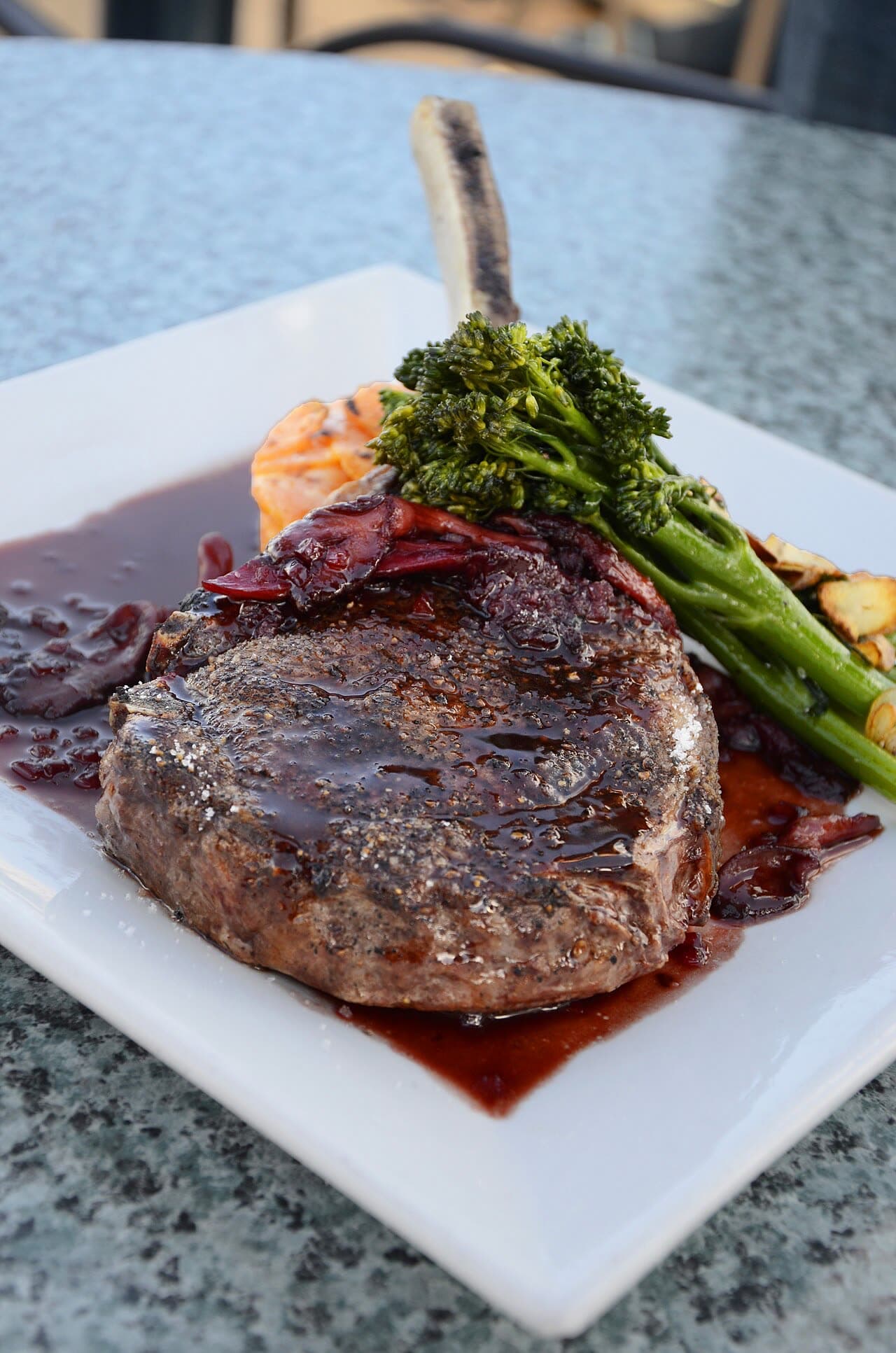
A steak, as a restaurant serves it. The question to ask: did the person eating it need it, or only want the taste?Alex Munsell · CC0 · source Need or taste
For almost everyone who shops in a supermarket, the only reason to choose meat is taste.
People matter more than animals, and this argument agrees. If a person truly needed meat, that need would outweigh the animal's suffering. Liking the taste is not a need.
Name the need
Only a real need can justify what factory farms do to animals.
Real needs exist: illness, a body that cannot absorb what it needs, poverty with no other food. If your family is not ready, that can limit what is served at shared meals. It does not decide what you buy and eat yourself.
Few people at the supermarket have a need like that.
More
A real need allows only as much as the need requires.
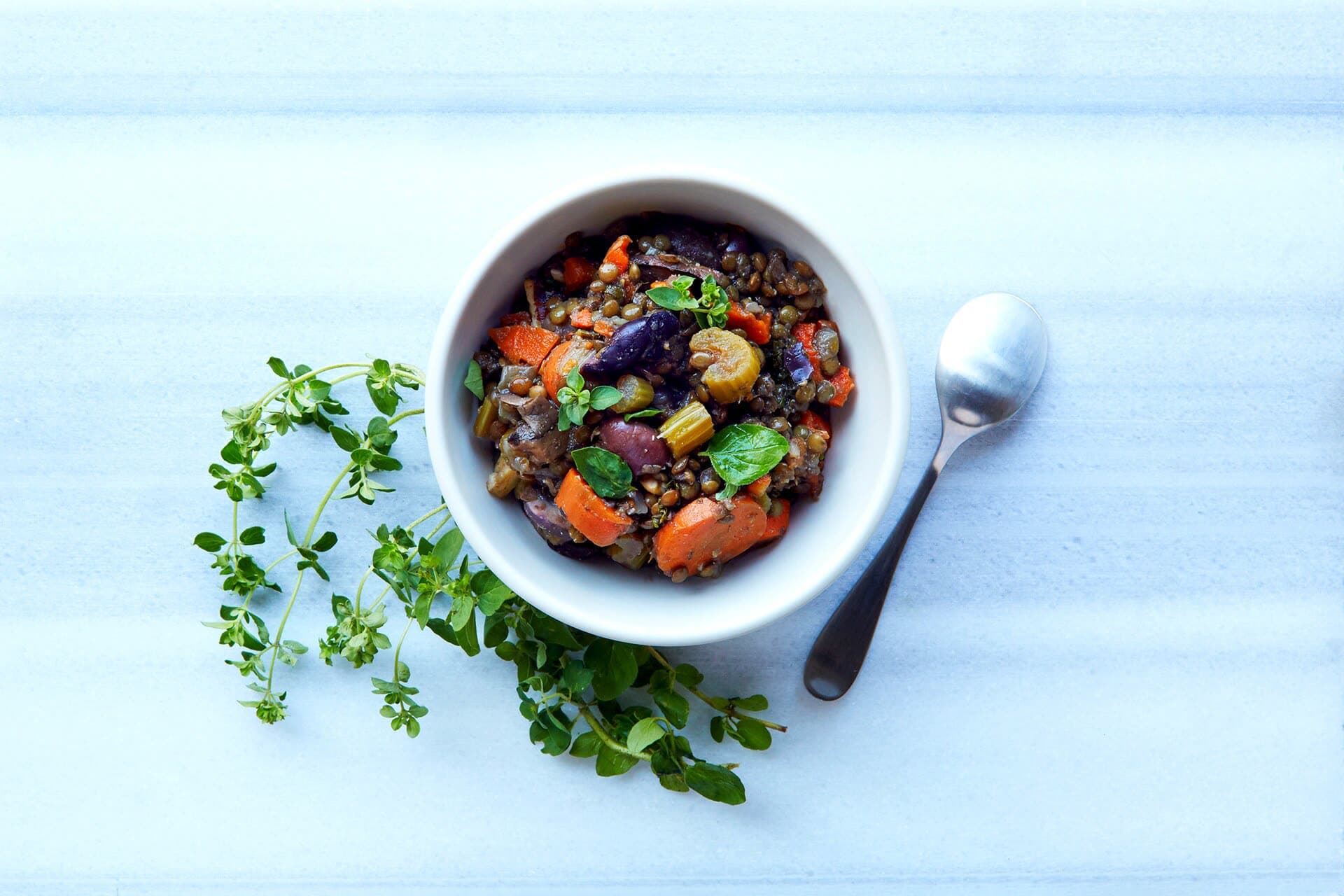
Lentils with carrot, celery and olives.Ella Olsson · CC BY 2.0 · source Also cited · Academy of Nutrition & Dietetics (2025)
The Academy's current position, in effect to 31 December 2032: for adults, appropriately planned vegetarian and vegan diets can be nutritionally adequate. By vegan it means a diet with no food from animals at all.
Academy of Nutrition & Dietetics, 2025 About this source
The 2025 paper covers only adults. It drops the 2016 paper's explicit endorsement for pregnancy, infancy and childhood. Those were not retracted; the review was simply limited to adults. The site uses the narrower claim. Its argument needs only this: the adult reading it can eat a healthy diet with no food from animals.Legal, or right
Something being legal does not make it right.
Everything shown here is legal. Killing male chicks on the day they hatch was legal in Germany too, until 2022. The chicks suffered just the same before the law changed.
See it
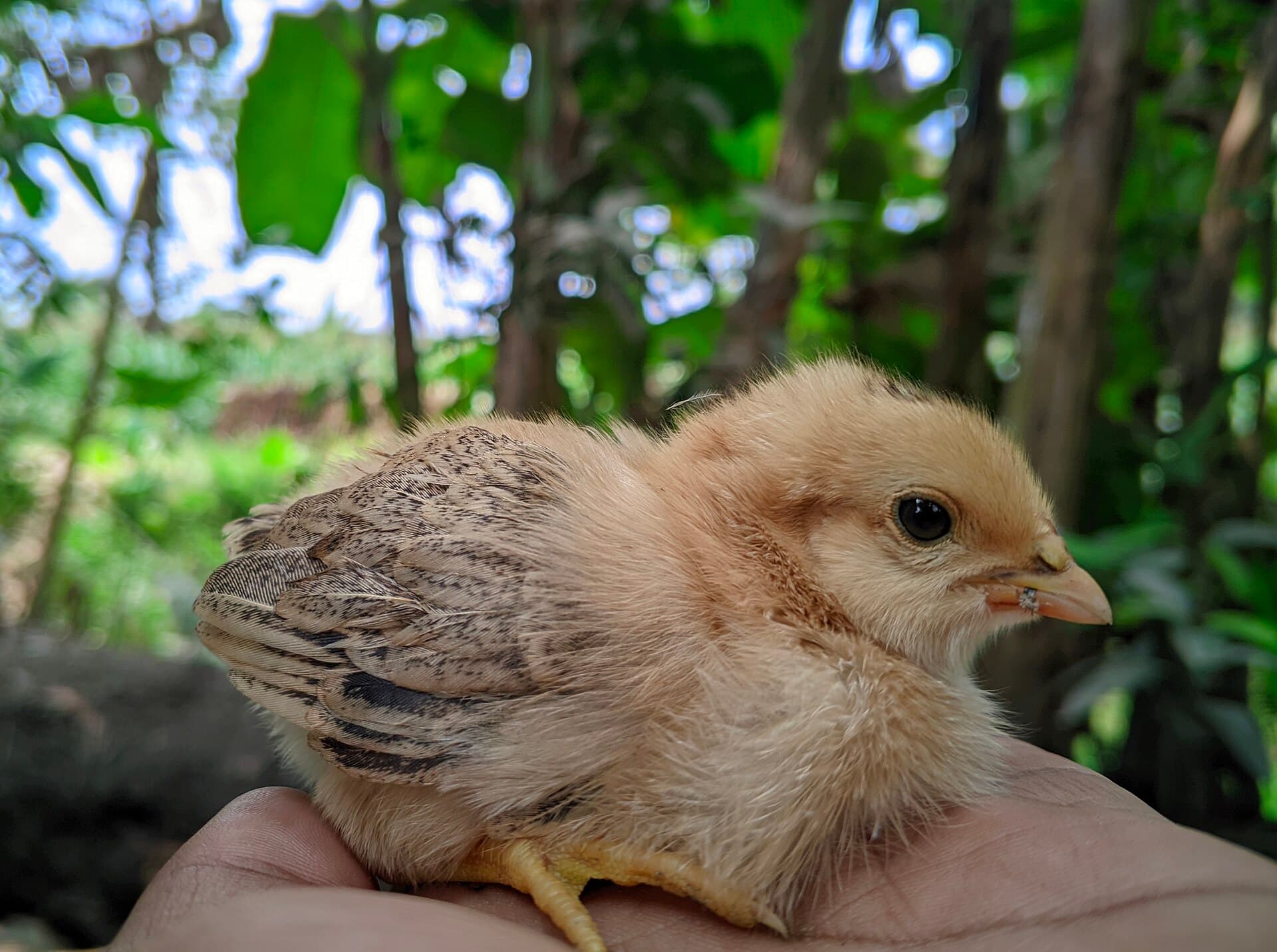
A chick a week or two old, sitting in someone's hand. He is very small. If he had hatched in a hatchery for laying hens and turned out to be male, he would not have lived this long: the males are killed on the day they hatch, billions of them a year.Tushar Hossain · CC BY-SA 4.0 · source Male chicks of laying breeds cannot lay and do not fatten well, so the egg industry kills them the day they hatch, by maceration or gassing, billions of them a year worldwide. Germany banned the practice from 1 January 2022, and France from 2023.
Krautwald-Junghanns et al., 2018 About this source
A peer-reviewed review, cited for the practice and its rationale rather than a precise tally (global estimates cluster around 6–7 billion a year). Germany's ban took effect 1 January 2022; France's decree followed, with white-egg layer lines, over a tenth of French male chicks, exempted because their sex is harder to tell inside the egg. Testing the egg's sex before it hatches is now the alternative. It does nothing at all for the hens themselves.Not a side issue
What you eat is one of the biggest choices you make every day.
Animal foods use 83% of the world's farmland to give back 18% of its calories.
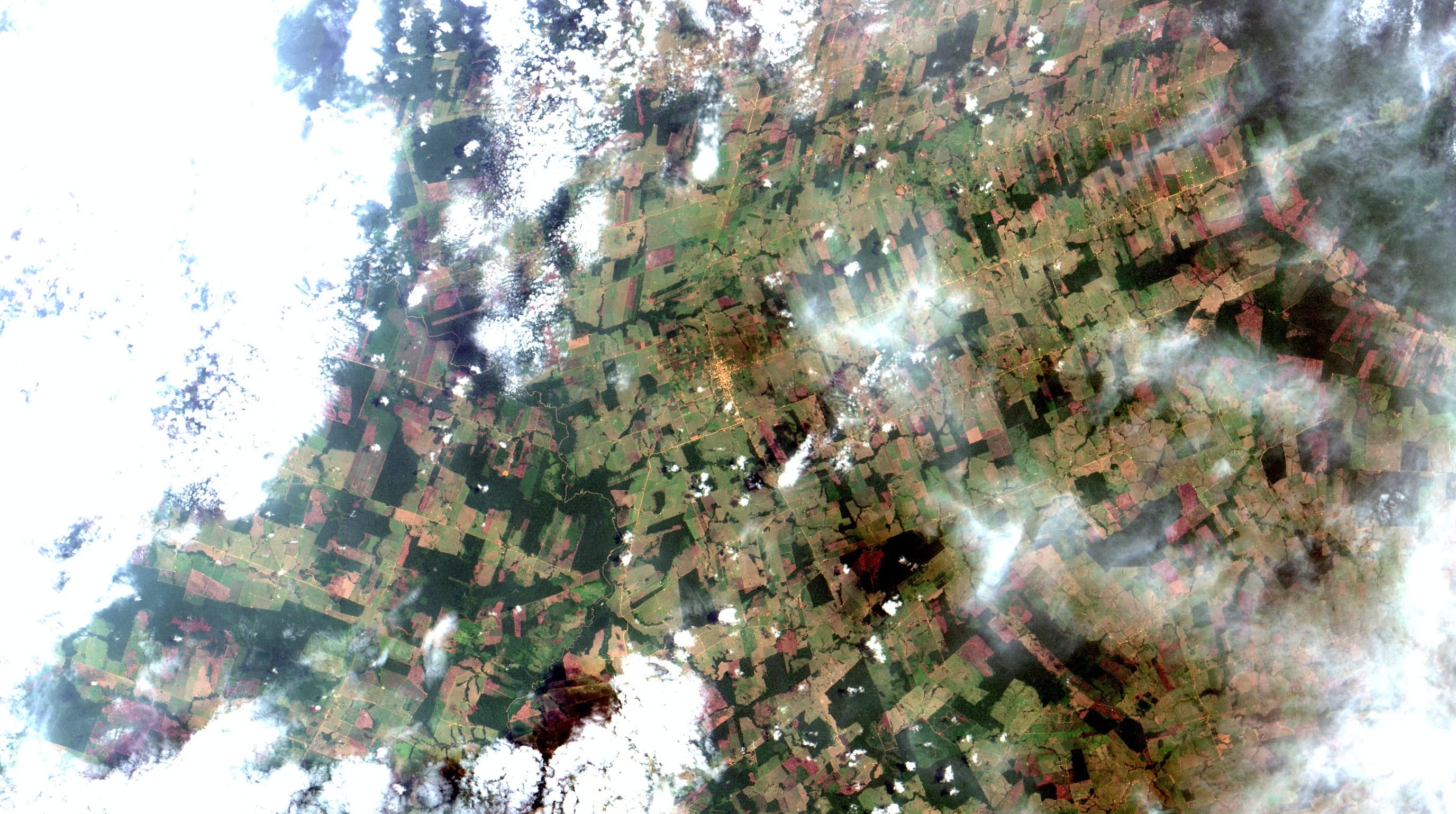
The Amazon in Rondônia, from orbit. The dark green is the forest that is left; the pale grid is land cleared for pasture and crops, cut along roads that branch off a main road like the bones of a fish.Coordenação-Geral de Observação da Terra / INPE · CC BY-SA 2.0 · source Meat, aquaculture, eggs and dairy use ~83% of the world's farmland and provide 18% of humanity's calories and 37% of its protein. The study covers 38,700 farms in 119 countries.
Poore & Nemecek, Science, 2018 About this source
Two sentences of its abstract matter for how every figure drawn from it should be read. First, the caveat: "Impact can vary 50-fold among producers of the same product", so an average says very little about any one farm. Second, what the authors concluded once they had accounted for that: "Most strikingly, impacts of the lowest-impact animal products typically exceed those of vegetable substitutes, providing new evidence for the importance of dietary change."Ending an old habit
Most of us no longer need meat, milk or eggs at all.
Every generation has given up something its parents thought normal, without calling its parents wicked. Your generation can give up meat, milk and eggs.
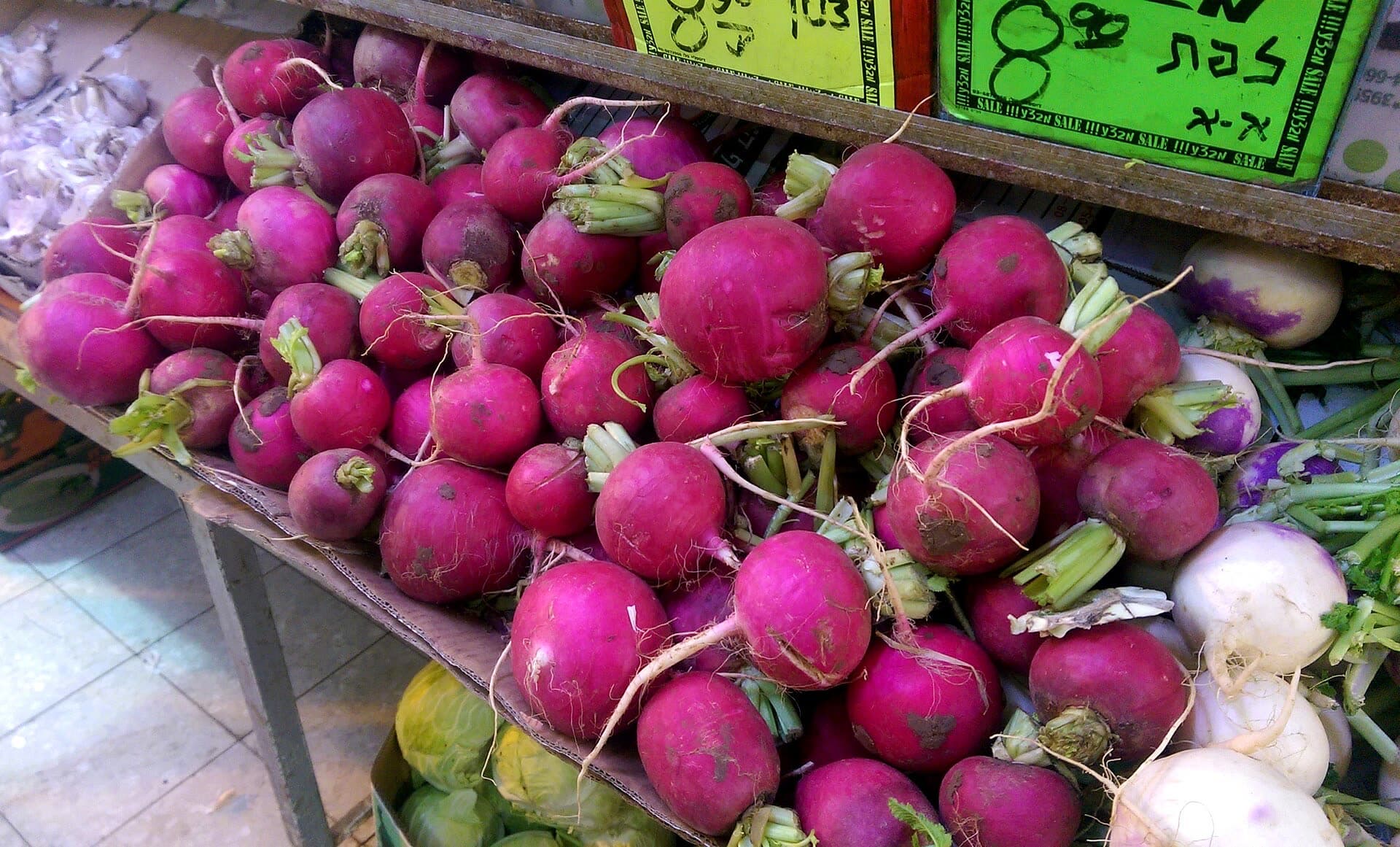
Radishes at Machane Yehuda market, Jerusalem. Today, for the first time, people can live well without eating anything from an animal.Maor X · CC BY-SA 4.0 · source Also cited · Academy of Nutrition & Dietetics (2025)
The Academy's current position, in effect to 31 December 2032: for adults, appropriately planned vegetarian and vegan diets can be nutritionally adequate. By vegan it means a diet with no food from animals at all.
Academy of Nutrition & Dietetics, 2025 About this source
The 2025 paper covers only adults. It drops the 2016 paper's explicit endorsement for pregnancy, infancy and childhood. Those were not retracted; the review was simply limited to adults. The site uses the narrower claim. Its argument needs only this: the adult reading it can eat a healthy diet with no food from animals.Also cited · B12 isolated, 1948
Vitamin B12 was first isolated in 1948, within living memory. That makes ours the first generation that can reliably eat a complete, healthy diet with no animal foods.
B12 isolated, 1948 About this source
Two teams, simultaneously: Rickes, Brink, Koniuszy, Wood and Folkers at Merck ("Crystalline Vitamin B12," Science 107:396–7, the linked paper) and E. Lester Smith at Glaxo ("Purification of Anti-pernicious Anæmia Factors from Liver," Nature 161:638–9, doi 10.1038/161638a0). The site's claim that ours is the first generation able to live this way depends on this date, so the site cites the original papers, not a later account.
The numbers
2,600 a second
That is how many land animals are killed for food every second. 83 billion a year, and 75 billion of them are chickens.
Young chickens raised for meat, crowded together on the floor of an ordinary shed. They are so young that some still have yellow down on their heads.
83+ billion land animals slaughtered per year, roughly 2,600 every second.
UN FAO, FAOSTAT, 2022 About this source
Chickens alone are about 75 of the 83 billion, 75.4 billion slaughtered in 2022 in the same FAOSTAT series, which is why step four starts from one hen. Fish are counted separately.10 land animals a year for each of us, on the world average
Eighty-three billion killed in one year, divided among eight billion people, comes to about ten each. A person who goes vegan stops funding the deaths of about ten animals a year, for life.
See it
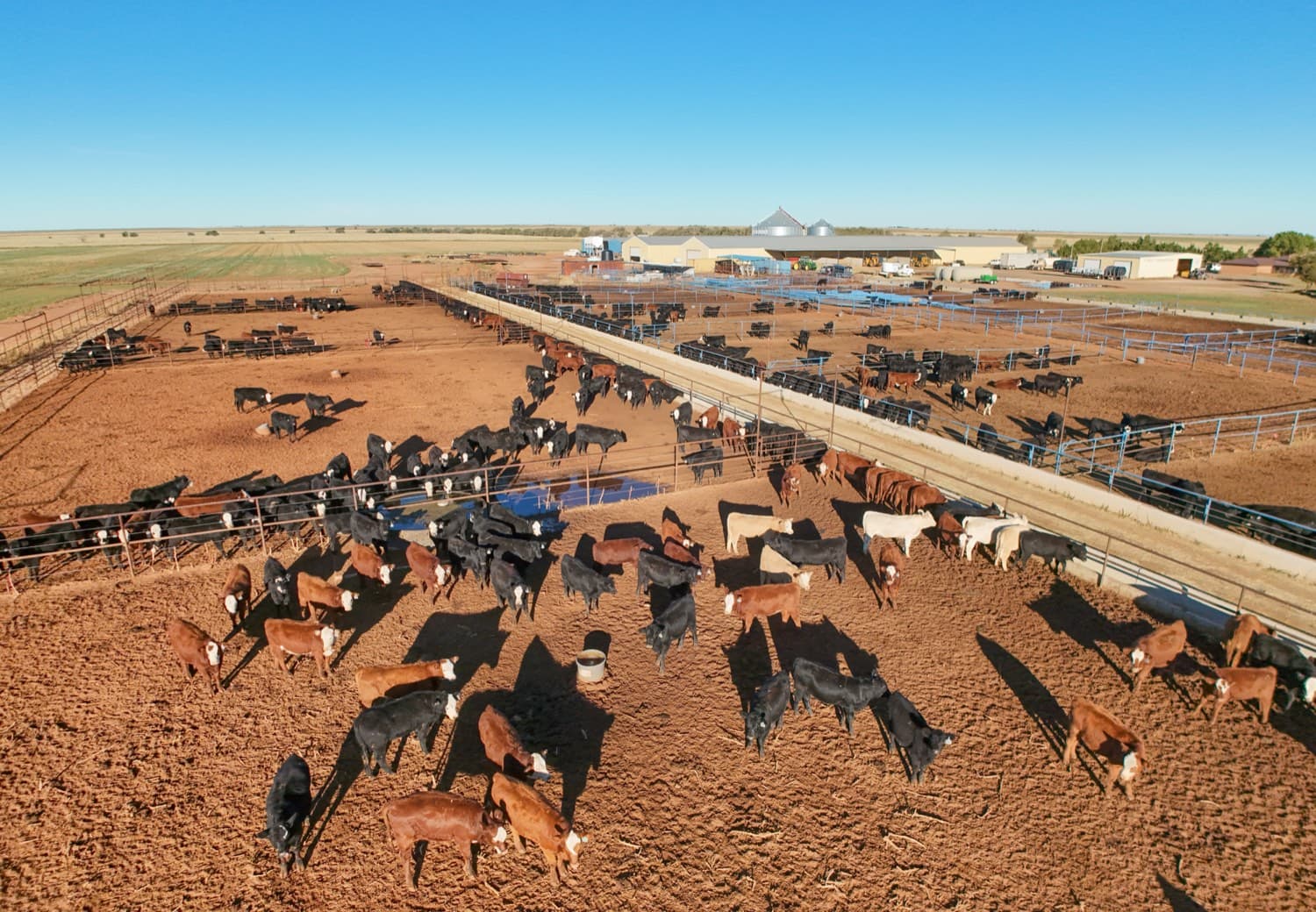
A cattle feedlot in New Mexico: hundreds of cattle on bare dirt, with no grass anywhere in the frame.Quintin Soloviev (2024) · CC BY 4.0 · source Also cited · UN FAO, FAOSTAT (2022)
83+ billion land animals slaughtered per year, roughly 2,600 every second.
UN FAO, FAOSTAT, 2022 About this source
Chickens alone are about 75 of the 83 billion, 75.4 billion slaughtered in 2022 in the same FAOSTAT series, which is why step four starts from one hen. Fish are counted separately.of the world's farmland
That land is used for animal foods, which supply only 18% of humanity's calories.
Also cited · Poore & Nemecek, Science (2018)
Meat, aquaculture, eggs and dairy use ~83% of the world's farmland and provide 18% of humanity's calories and 37% of its protein. The study covers 38,700 farms in 119 countries.
Poore & Nemecek, Science, 2018 About this source
Two sentences of its abstract matter for how every figure drawn from it should be read. First, the caveat: "Impact can vary 50-fold among producers of the same product", so an average says very little about any one farm. Second, what the authors concluded once they had accounted for that: "Most strikingly, impacts of the lowest-impact animal products typically exceed those of vegetable substitutes, providing new evidence for the importance of dietary change."Day one is the last day for most male chicks
Male chicks cannot lay eggs, so the egg industry kills them on the day they hatch, billions a year. Germany banned the practice in 2022.
Also cited · Krautwald-Junghanns et al. (2018)
Male chicks of laying breeds cannot lay and do not fatten well, so the egg industry kills them the day they hatch, by maceration or gassing, billions of them a year worldwide. Germany banned the practice from 1 January 2022, and France from 2023.
Krautwald-Junghanns et al., 2018 About this source
A peer-reviewed review, cited for the practice and its rationale rather than a precise tally (global estimates cluster around 6–7 billion a year). Germany's ban took effect 1 January 2022; France's decree followed, with white-egg layer lines, over a tenth of French male chicks, exempted because their sex is harder to tell inside the egg. Testing the egg's sex before it hatches is now the alternative. It does nothing at all for the hens themselves.5 minutes with her calf is enough to bond
When her calf was taken, every cow in the study paced and called out without stopping. Twelve hours later, each cow could still pick out her own calf.
More
A human mother in her place would still be listening for her baby.
Five minutes with her calf after birth is enough to form a strong bond specific to that calf. Separated, every cow in the study showed distress — walking, urinating, butting, vocalising continually from one end of the paddock. She could still recognise her own calf twelve hours later. By twenty-four hours she was still distressed, and could no longer tell which calf was hers.
Hudson & Mullord, 1977 About this source
A 1977 study by researchers of cattle farming, not an advocacy paper. That is why this page relies on it. It has two limits: it did not measure whether she suffers more or less than a human mother would, and it is one study from one herd.$885 million a year of US government-mandated marketing
Twenty-two producer-funded programs overseen by the USDA, 'Got Milk?' and 'Beef. It's What's for Dinner' among them, raised it in one year, a government audit found.
Dairy alone was $332 million, and the industry's own advertising is on top.
Also cited · US GAO, GAO-18-54 (2017)
The USDA oversees 22 producer-funded "checkoff" marketing programs, the ones behind "Got Milk?" and "Beef. It's What's for Dinner". In 2016 their assessments totalled over $885 million, ranging from $0.6 million for popcorn to $332.1 million for dairy.
US GAO, GAO-18-54, 2017 About this source
A neutral government-auditor source, not an advocacy one. Checkoff assessments are federally mandated marketing orders; the figures are the GAO's, for 2016. Private advertising by processors and restaurant chains is separate, and far larger.
What the farms look like
Melanie Joy's talk Toward Rational, Authentic Food Choices, at TEDxMünchen.
Nothing loads from YouTube until you press it.
Eggs
A hen wants to make a nest before she lays, and to scratch and bathe in dust. In these cages she can do none of it. The eggs roll out through the bars, and the hens never leave.
Laying hens in battery cages in Bastos, Brazil, their heads pushed out through the bars. Their eggs roll away on the belt below them.
See the rest of the footage (3)
Chicken
This is a free-range shed, with doors to the outside. Free-range is the best the chicken industry offers, and it still looks like this.
Thousands of chickens raised for meat, packed end to end inside a free-range shed.
Milk
A dairy barn. Each cow is chained to her place by the neck, and the calf behind her is chained too.
A tethered dairy barn in Poland, 2014. Each cow is chained to her place by the neck. The cow looking at the camera is a mother. She is kept giving milk, and each calf she bears is taken from her.
Turkey
This turkey has been bred heavier than her legs are built to carry. The males of her breed can no longer mate reliably, so the industry breeds them by hand.
A young turkey alone against the wall of a commercial shed. Her white feathers are thin and dirty.
What people say
Heard every day
“We’re at the top of the food chain.”Being able to eat animals is not a reason to eat them.
A lion has to kill to eat. We do not, so for us eating an animal is a choice.
“It’s natural.”Nothing about a cage or a crate is natural.
Disease is natural too, and so was dying at forty. We fight both, because natural does not mean good.
More
People are not lions. We have other food, and we do not need meat to survive.
“So a chicken is worth the same as a person?”No. People matter more, and nothing here depends on pretending otherwise.
You would not let anyone hurt a dog for the fun of it, and a dog matters less than a child. We ask the same for the hen, and nothing more.
“People have always eaten meat.”No generation before yours could safely live without animal foods, and yours can.
A cow feels pain just as she always did. What changed, within living memory, is that people no longer need to eat her: vitamin B12 was isolated in 1948.
The Academy's current position, in effect to 31 December 2032: for adults, appropriately planned vegetarian and vegan diets can be nutritionally adequate. By vegan it means a diet with no food from animals at all.
About this source
The 2025 paper covers only adults. It drops the 2016 paper's explicit endorsement for pregnancy, infancy and childhood. Those were not retracted; the review was simply limited to adults. The site uses the narrower claim. Its argument needs only this: the adult reading it can eat a healthy diet with no food from animals.“They'd die anyway.”Every animal dies some day. That does not make it right to cage her and kill her young.
Breeding an animal into a life in a shed does her no favour. And the fact that she would die later is no reason to kill her now.
The moral ones
“It’s quick.”Even if the death is quick, the animal suffers for months before it.
A quick death does nothing about the cage, the crate or the truck.
More
EU scientists describe a dairy calf's first months: she is taken from her mother and her horn buds are burned out, pain their report calls severe.
Calves are routinely disbudded: the bud where a horn would grow is destroyed with a hot iron or caustic paste. The Panel states plainly that both methods cause severe pain. It also addresses castration, and taking the calf from his mother, which it counts as a harm in its own right: "The great majority of dairy farms separate dam and calf immediately after birth." The Panel recommends keeping mother and calf together for at least 24 hours.
About this source
Some EU member states require anaesthesia for disbudding and others do not. No one disputes that disbudding causes pain. The states differ only on whether farmers must prevent it.“I only buy humane.”A humane label does not change how eggs and milk are made.
You cared enough to look for a better farm. However kindly a hen is kept, her brothers were killed the day they hatched. And a cow gives milk only because she has had a calf.
More
The only way to fund none of this is to stop buying meat, milk and eggs.
People eat grass-fed steak because they want it, not because they need it. Only a real need can justify an animal's pain.
“It’s a personal choice.”It is your choice, but an animal suffers because of it.
Every purchase funds the next animal. Other people do the work, and your money keeps them doing it.
More
If one person's purchases made no difference, no purchase would matter to any industry. Nobody believes that.
“If it were that bad, it would be illegal.”The law has not caught up with what the EU's own scientists found.
Their public report describes the harm cages do to hens, and the cages are still legal.
The EU's own scientific panel on cutting hens' beaks: it harms the hens, it is done to stop them pecking and injuring each other, and it "should not be necessary if good management practices are implemented". The Panel recommends phasing it out. On cages, it finds that the small space and bare surroundings stop hens from doing what they are strongly motivated to do.
About this source
This is a regulator's scientific opinion, not a campaign document, and that is why it is here. It describes harm and recommends phasing the practice out. It does not call the industry cruel. That word is this site's own, and the site argues for it; it does not borrow it from the Panel.Going only part of the way
“I’ll cut out meat.”Going vegetarian is not enough. Eggs and milk cause suffering too.
The egg industry kills most male chicks on the day they hatch. Dairy farms take each calf from his mother.
More
Your money funds the hatchery and the dairy, even if you never eat meat.
Male chicks of laying breeds cannot lay and do not fatten well, so the egg industry kills them the day they hatch, by maceration or gassing, billions of them a year worldwide. Germany banned the practice from 1 January 2022, and France from 2023.
About this source
A peer-reviewed review, cited for the practice and its rationale rather than a precise tally (global estimates cluster around 6–7 billion a year). Germany's ban took effect 1 January 2022; France's decree followed, with white-egg layer lines, over a tenth of French male chicks, exempted because their sex is harder to tell inside the egg. Testing the egg's sex before it hatches is now the alternative. It does nothing at all for the hens themselves.“I’ll keep only fish.”Fish feel pain.
A fish injected with an irritant rubs the spot, rocks, and stops eating. That is pain behaviour, not a reflex.
Fish have nociceptors in the lip, fin and skin; injected with an irritant they rub the spot, rock, and stop eating: pain behaviour, not reflex. The review concludes that fish likely feel pain.
“I’ve cut back.”Eating less still causes needless suffering.
Half as much needless suffering is still needless suffering. Each time you buy meat, milk or eggs, your money funds the next animal's suffering.
More
The meals you skipped do not help the animal you still buy. You have already started: go vegan from your next meal.
The practical ones
“I need the protein, and it’s expensive.”Well-planned vegan eating can give adults enough of every nutrient.
That is the current position of the Academy of Nutrition and Dietetics. You will need one supplement, B12.
More
If you truly cannot afford other food, that is a real need. If you can afford beans and lentils, cost is not a need.
The Academy's current position, in effect to 31 December 2032: for adults, appropriately planned vegetarian and vegan diets can be nutritionally adequate. By vegan it means a diet with no food from animals at all.
About this source
The 2025 paper covers only adults. It drops the 2016 paper's explicit endorsement for pregnancy, infancy and childhood. Those were not retracted; the review was simply limited to adults. The site uses the narrower claim. Its argument needs only this: the adult reading it can eat a healthy diet with no food from animals.“Plants feel pain.”If plants count, eating animals harms more of them.
Animals raised for food eat crops. Feeding them crops and then eating them takes more crops, more land and more deaths than eating the crops yourself.
More
A hundred grams of protein from beef takes about 164 square meters of land. From tofu, about two.
Meat, aquaculture, eggs and dairy use ~83% of the world's farmland and provide 18% of humanity's calories and 37% of its protein. The study covers 38,700 farms in 119 countries.
About this source
Two sentences of its abstract matter for how every figure drawn from it should be read. First, the caveat: "Impact can vary 50-fold among producers of the same product", so an average says very little about any one farm. Second, what the authors concluded once they had accounted for that: "Most strikingly, impacts of the lowest-impact animal products typically exceed those of vegetable substitutes, providing new evidence for the importance of dietary change."“My family would never go along with it.”If your family is not ready, change your own food and leave the shared meals alone.
Nobody needs to fight their family over dinner. Answer their questions when they ask.
More
You may miss some of the food, and that is a real loss, but the people and the noise of those dinners stay.
Your decision
Almost none of us chose to eat animals.
We were born into it and raised on it, and most of us lived that way for years. Nobody here is accusing you.
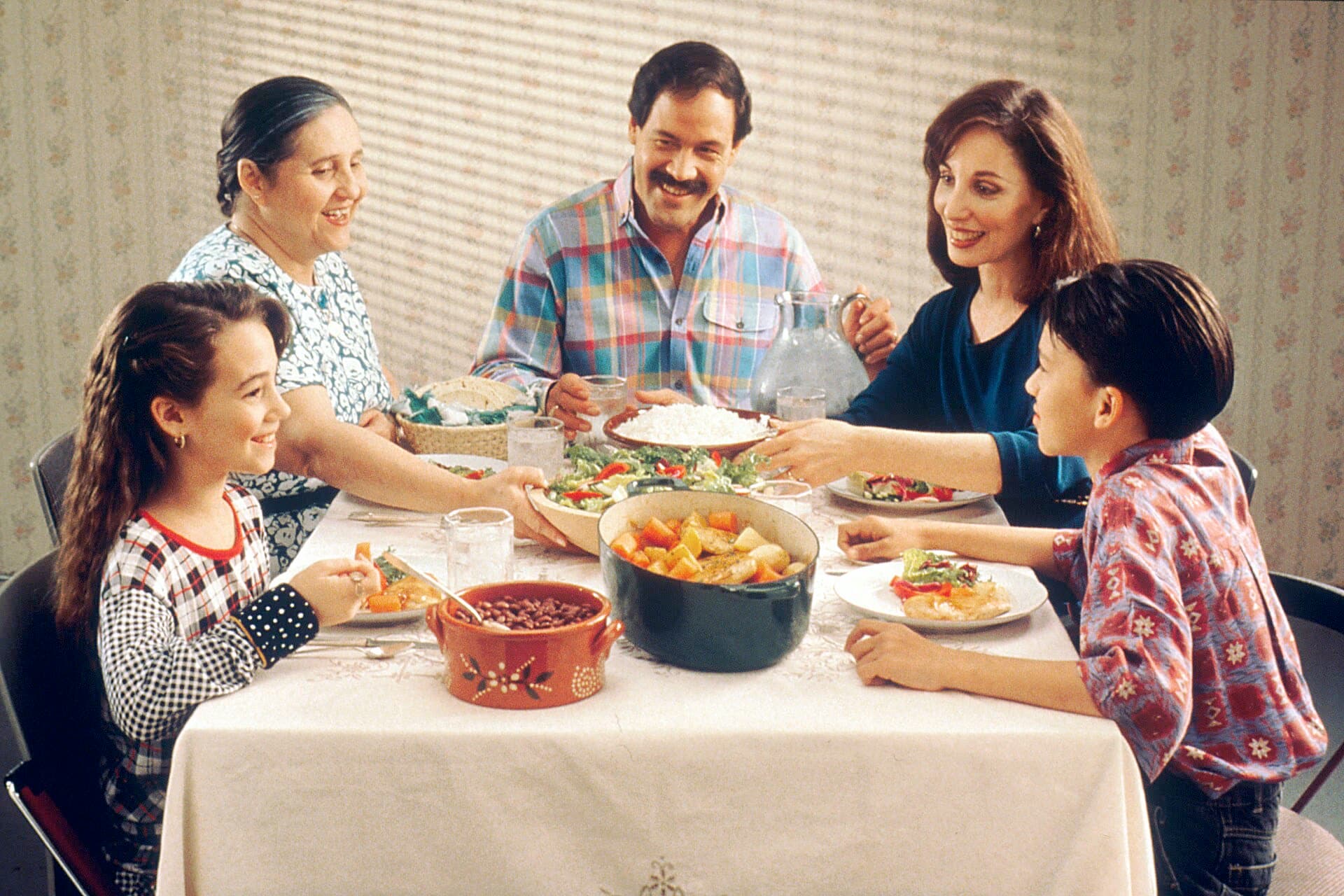
Now you know how meat, milk and eggs are made.
From now on, buying them is a choice you make knowing what happens to the animals.
More
Putting off the decision is also a decision: to keep buying them.
You would not pay a man to kick a dog and call yourself a bystander.
When you buy meat, milk or eggs, the farm raises another animal to replace what you bought.
More
Meat, milk and eggs come from the same industry and the same suffering. Go vegan.
If what you saw here moved you, decide today.
Most people change how they eat only after something moves them. The feeling fades if you wait.
Something can be permitted and still be wrong to do.
Asking whether you may is a question about the rules. Asking whether you should is about the kind of person you want to be.
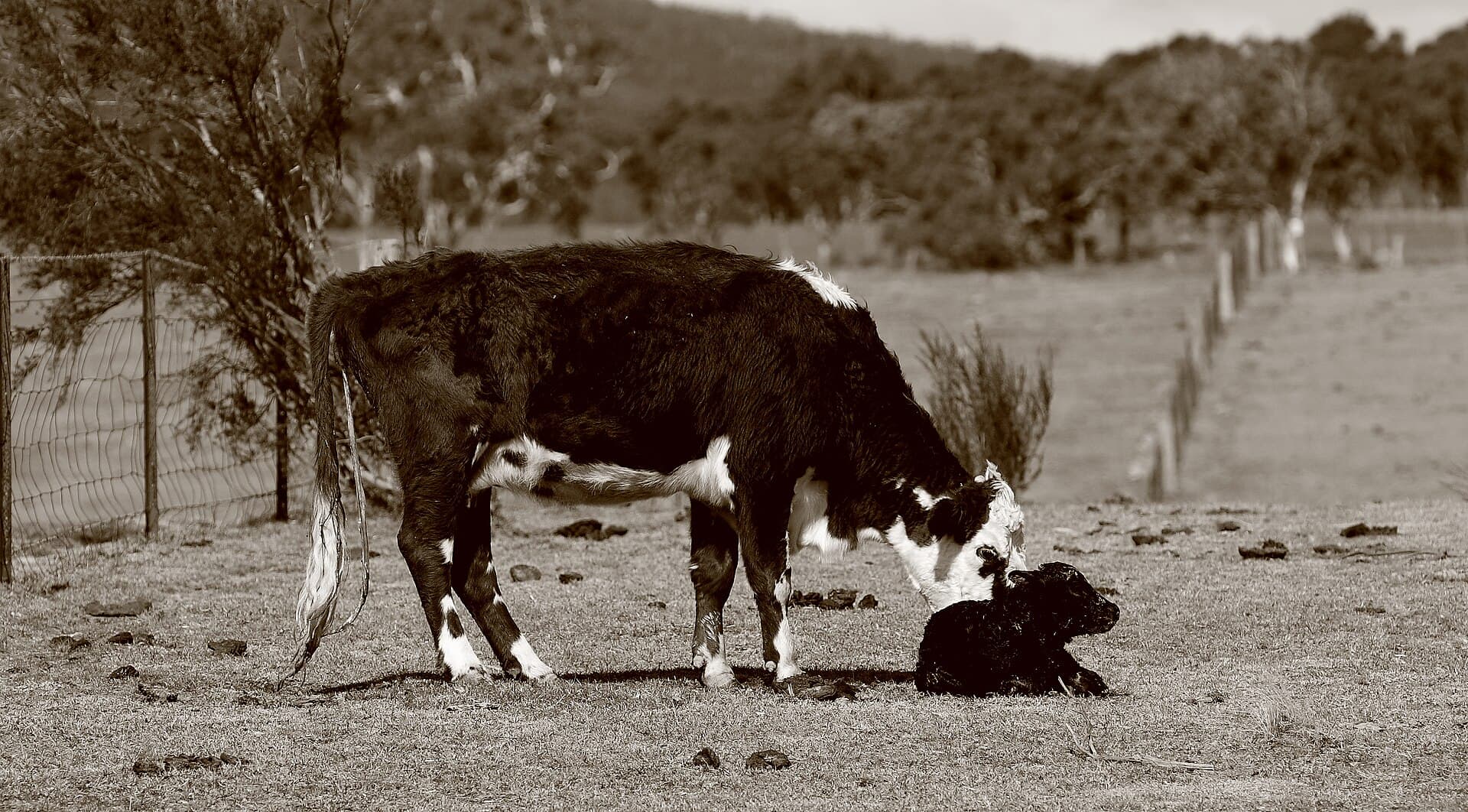
Every glass of milk comes from a cow whose calf was taken from her.
In that study, each cow still knew her own calf twelve hours after he was taken.
See it
Also cited · Hudson & Mullord (1977)
Five minutes with her calf after birth is enough to form a strong bond specific to that calf. Separated, every cow in the study showed distress — walking, urinating, butting, vocalising continually from one end of the paddock. She could still recognise her own calf twelve hours later. By twenty-four hours she was still distressed, and could no longer tell which calf was hers.
About this source
A 1977 study by researchers of cattle farming, not an advocacy paper. That is why this page relies on it. It has two limits: it did not measure whether she suffers more or less than a human mother would, and it is one study from one herd.You can go vegan, starting now.
Most people in history could not live well without animal foods. You can.
Now the decision is yours.
Nobody else can decide what you eat. You can decide today.
Start now
Your next meal.
Decide now what your next meal will be: name the dish, not just 'something vegan'. Then do the same at every meal after it, with no end date.
More
Start taking B12 this week. It is the supplement every vegan needs.
Every source on this site, linked to the original wherever a link exists.
If you are Jewish, the same case from the Torah starts at step one, the law. This page is also in Hebrew.